Связаться с нашей командой

Связаться с нашей командой
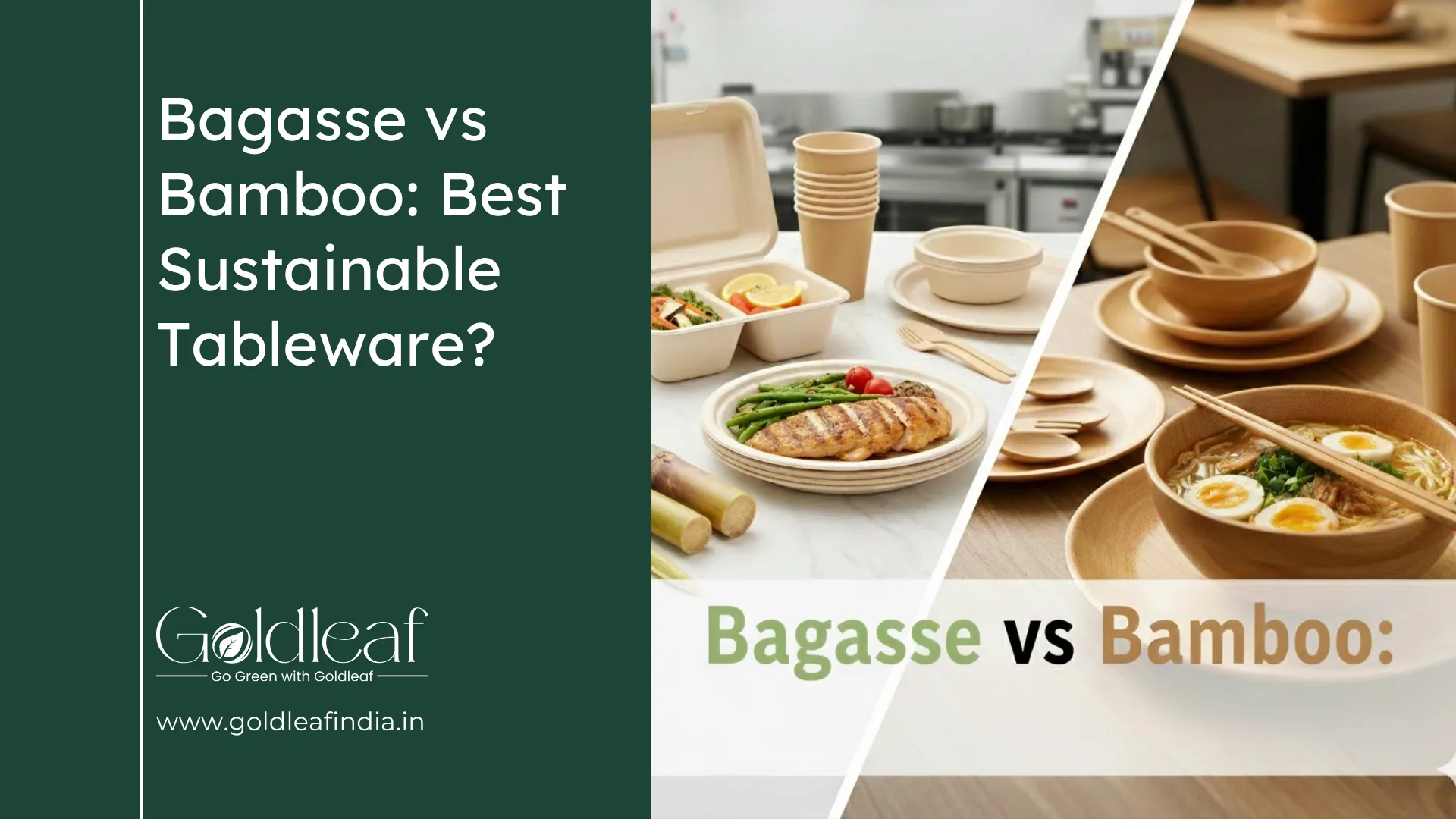
Growing environmental awareness has made sustainable tableware the go to choice for homes, cafés, restaurants, and the broader hospitality industry. As consumers become increasingly conscious of their environmental footprint, businesses are seeking eco-friendly alternatives that align with their values without compromising on quality or convenience.
However, with multiple eco-friendly materials like bagasse and bamboo emerging in the market, choosing the right one for daily or commercial use can be confusing. Each material comes with its own set of advantages, applications, and cost considerations. Both bagasse tableware and bamboo tableware are biodegradable and environmentally responsible, but they differ significantly in durability, composting speed, cost-effectiveness, and practical applications.
This comprehensive guide will help you understand the key differences between these two popular materials, enabling you to make an informed decision that suits your specific needs. At Goldleaf India, we specialize in manufacturing premium bagasse tableware made from sugarcane waste a sustainable innovation that transforms agricultural byproducts into high-quality, eco-friendly tableware solutions. As India's trusted manufacturer of sustainable tableware, we're committed to providing products that balance environmental responsibility with practical functionality and exceptional value making every meal a step toward a cleaner, greener planet.
The global plastic pollution crisis demands urgent action over 300 million tons of plastic waste are produced annually, with plastic taking more than 450 years to decompose. Governments worldwide, including the EU, India, and Canada, have implemented single-use plastic bans to curb pollution. Consumers overwhelmingly prefer eco-friendly brands, making sustainable tableware a business imperative. Switching to biodegradable products significantly reduces landfill waste and ocean pollution, improves brand reputation, and ensures regulatory compliance.
300+ million tons of plastic waste yearly
Plastic takes 450+ years to decompose
80+ countries have implemented plastic bans
73% of consumers prefer eco-friendly brands
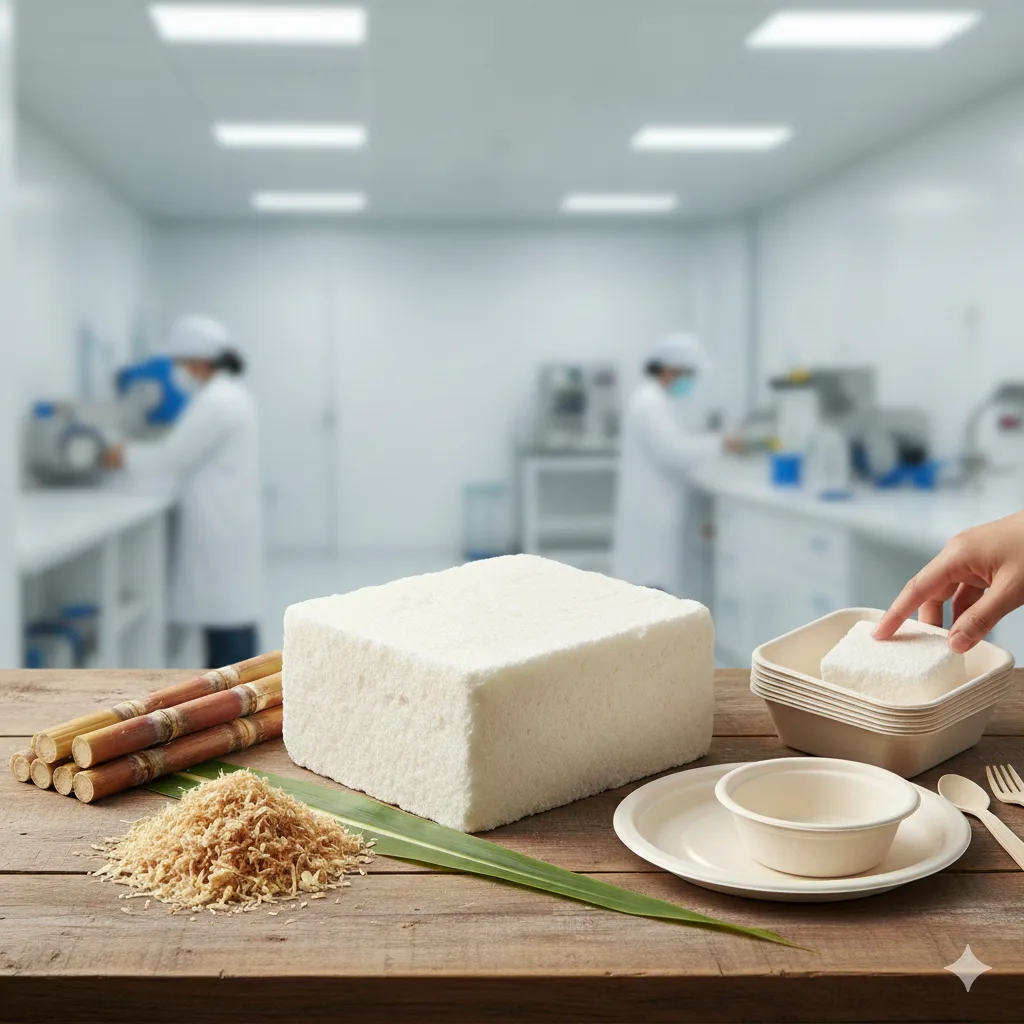
Bagasse is the fibrous residue left after extracting juice from sugarcane. What was once agricultural waste is now being transformed into one of the most efficient and sustainable packaging materials in the world.
In sugarcane-producing countries like India, Brazil, and Thailand, bagasse is an abundant, renewable resource. At Goldleaf India, we specialize in converting this byproduct into high-quality bagasse tableware turning waste into value while supporting a circular, zero waste economy.
Our production process ensures efficiency, safety, and sustainability at every step:
Raw Material Preparation: After sugarcane juice extraction, the remaining fiber (bagasse) is cleaned and refined into pulp.
Pulp Molding: The pulp is molded into desired shapes plates, bowls, trays, and containers using high heat and pressure.
Eco-Friendly Finishing: We use hydrogen peroxide, a non-toxic bleaching agent, to achieve a natural white tone no harmful chemicals involved.
Quality Testing: Each product undergoes durability, heat resistance, and safety checks before packaging.
The result? Sturdy, stylish, and 100% compostable tableware ready for safe, sustainable use.
Lightweight and portable
Suitable for hot and cold foods; heat resistant up to 200°F
Oil and grease resistant with natural coatings
Microwave and freezer safe
Decomposes within 60-90 days under composting conditions
FDA-approved and cost-effective
Natural cream white color
These properties make sugarcane bagasse tableware a perfect choice for hospitals, restaurants, corporate cafeterias, and caterers aiming for hygienic and eco-conscious serving.
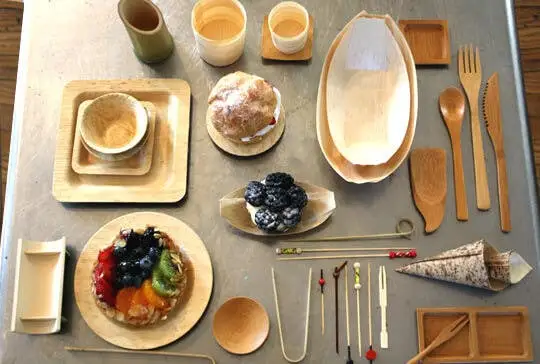
Bamboo is a fast growing renewable grass that matures in 2–3 years much faster than hardwood trees. It grows without the need for fertilizers, replanting, or pesticides and absorbs high levels of CO₂, making it a sustainable raw material.
Because of its natural antibacterial properties and elegant look, bamboo has gained popularity for premium food service applications.
Manufacturers harvest mature bamboo, extract fibers, and process them into pulp using minimal energy and water. The pulp is then molded and pressed into various forms such as plates and bowls. The long fibers make bamboo strong, durable, and water resistant.
Features:
Up to 3x stronger than bagasse in tear resistance
Suitable for both hot and cold foods
Naturally antimicrobial and odor resistant
Can be reused multiple times before composting
Premium look and finish
Decomposes within 90–120 days
Slightly higher in cost
While bamboo offers a more refined aesthetic, it’s generally less scalable and more expensive than bagasse for large-scale use.
|
Parameter |
Bagasse Tableware (Goldleaf India) |
Bamboo Tableware |
|
Material Source |
Utilizes sugarcane waste |
Made from fast-growing bamboo |
|
Eco Impact |
Supports circular economy; waste-to-value |
Renewable grass with CO2 absorption |
|
Biodegradability |
100% compostable within 60–90 days |
Biodegradable, composts 90–180 days |
|
Durability |
Strong, lightweight, single-use |
Stronger, semi-reusable |
|
Cost Efficiency |
Cost-effective, ideal for bulk use |
Higher production cost |
|
Aesthetic Appeal |
Simple and functional |
Premium natural finish |
Significant landfill waste reduction
Lower carbon footprint from renewable materials
Safe composting enriches soils naturally
Eliminates plastic dependence in food service
Saves energy in production
Promotes circular, zero-waste economy
Encourages responsible consumption
Goldleaf India offers unparalleled quality, customizable solutions, and reliable supply chains to the foodservice and hospitality sectors. Their bagasse tableware supports zero-waste initiatives with quick composting and easy handling, making it the smart and practical choice for sustainable dining.
Our key advantages:
Affordable bulk pricing for large-scale operations
Custom branding and packaging options
ISO-certified manufacturing for food safety
Fast delivery and export-ready logistics
Wide range: plates, bowls, trays, cups, and cutlery sets
Both are sustainable, but bagasse has a lower carbon footprint since it’s made from agricultural waste, not cultivated crops.
Bagasse decomposes in 60–90 days, while bamboo may take up to 180 days.
Yes, Goldleaf India’s bagasse plates are microwave and freezer safe.
Absolutely. Our tableware is heat- and grease-resistant, suitable for any cuisine.
It’s made from abundant sugarcane residue, making it affordable and scalable for mass production.
Both bagasse tableware and bamboo tableware are remarkable examples of sustainable tableware, but for large-scale, everyday use, bagasse stands out as the smarter choice faster to compost, cost-efficient, and made from renewable waste.
At Goldleaf India, we’re proud to lead the movement toward cleaner dining with our range of biodegradable products. Our mission is simple: to make sustainability practical, affordable, and accessible one plate at a time.
Choose Goldleaf India and let every meal serve the planet.
Goldleaf India Является ведущим производителем экологически чистых продуктов Bagasse. Наши продукты Bagasse изготовлены из мякоти сахарного тростника, которая является побочным продуктом сахарной промышленности.
© 2024 , Goldleaf ,
Все права защищены.
Made & Managed by Lightlink Solutions